Gravitational Waves
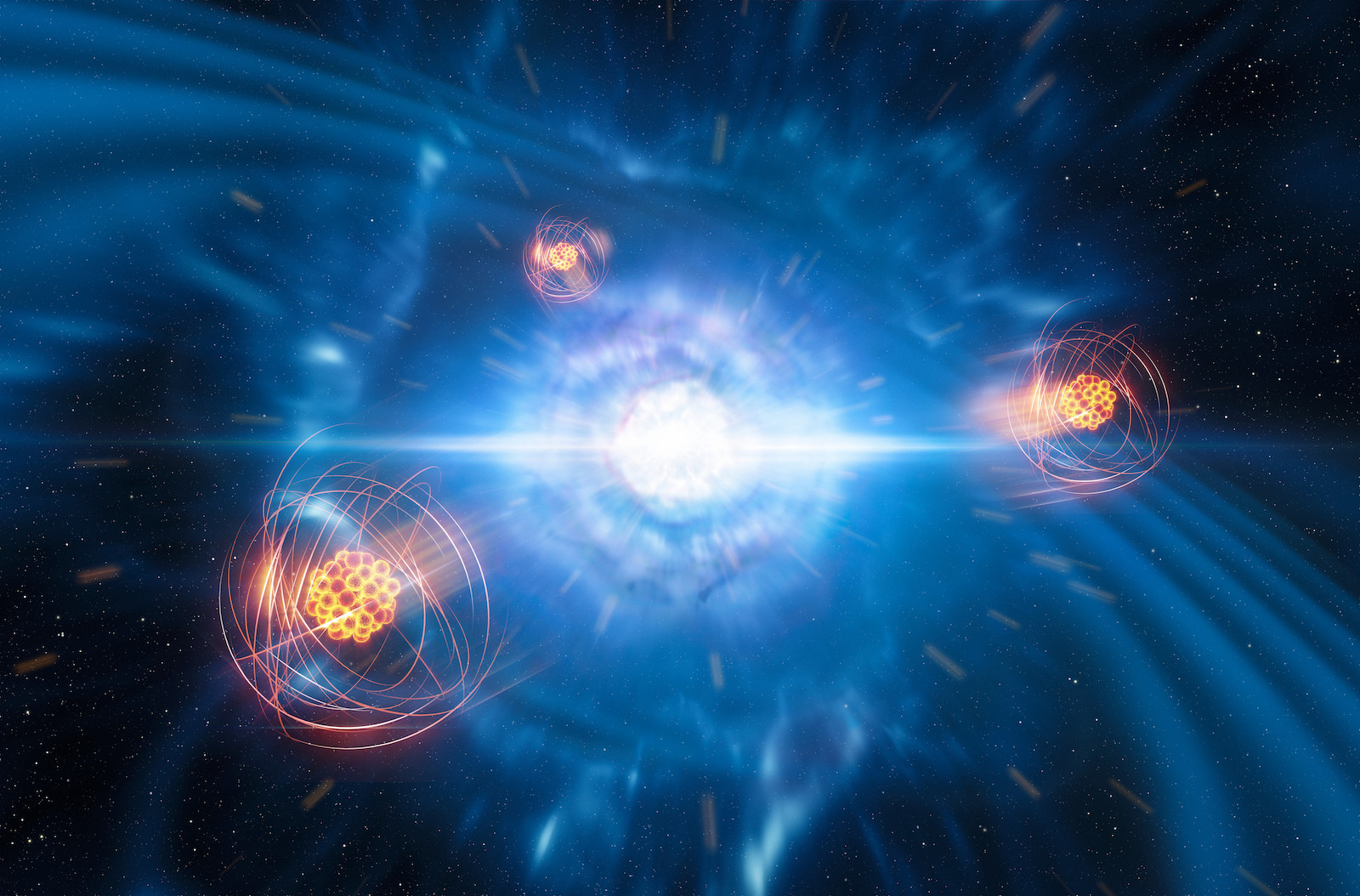
Gravitational waves (GWs) are ripples in spacetime predicted by Einstein’s theory of general relativity and produced whenever masses accelerate. Because these signals are extremely weak, only the most violent events in the Universe are currently detectable: the collisions and mergers of black holes and/or neutron stars. Black holes do not let light escape and therefore their mergers are not expected to produce an electromagnetic signal. However, mergers involving neutron stars can give rise to gamma-ray bursts and kilonovae — transients that are fainter, faster and redder than supernovae. These events are of fundamental importance, as they are predicted to be major sites for the production of the heaviest elements in the Universe, such as gold!
As an optical astronomer, my research focuses on gravitational-wave events that are accompanied by electromagnetic emission. The combination of gravitational waves and light has marked the birth of multi-messenger astrophysics, allowing precise source localization, distance measurements, and direct insight into the physical processes powering these extreme explosions. Below, I highlight my involvement to this field.
Selected results
The kilonova associated with GW170817
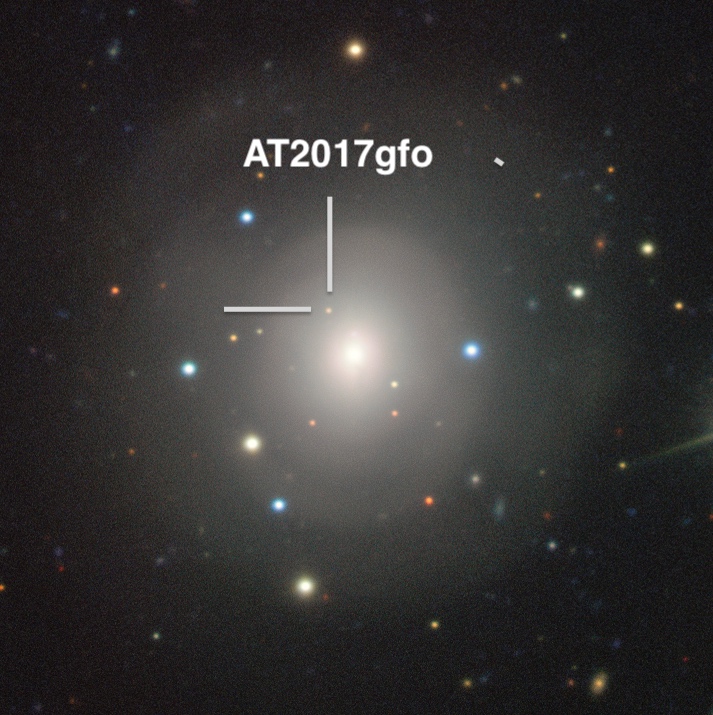
The first joint detection of gravitational waves and electromagnetic radiation from a neutron-star merger, GW170817, marked a milestone in astrophysics. I had the privilege to play an active role in one of the original studies of the associated kilonova AT2017gfo and the follow-up detailed investigation of its chemical composition. Kilonovae may be the main producers of the heaviest elements in the periodic system, including gold and the lanthanides.
ENGRAVE
ENGRAVE is a large European consortium dedicated to the follow-up of gravitational-wave events and their electromagnetic counterparts. Its goal is to obtain high-quality, homogeneous datasets and to provide robust physical interpretation of future kilonovae. I am an active member of ENGRAVE, where I also serve as the coordinator of the polarimetry working group.
The search for more counterparts
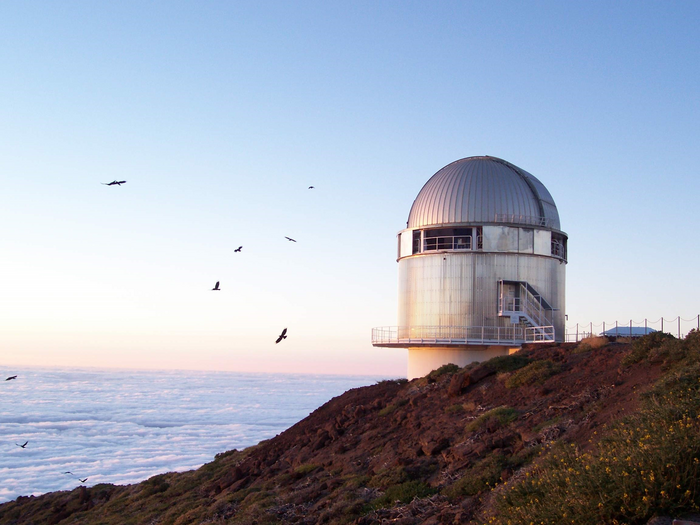
While facilities such as the VLT enable the detailed characterization of gravitational-wave counterparts, the first challenge is their discovery. This task is typically addressed by wide-field facilities that can rapidly scan large localization regions, such as BlackGEM. In parallel, an alternative and complementary strategy is to target the most massive galaxies within gravitational-wave error regions, which are more likely to host the merger. At the Nordic Optical Telescope (NOT), I am co-leading a programme dedicated to the discovery and follow-up of gravitational-wave counterparts using this approach.