Supernovae
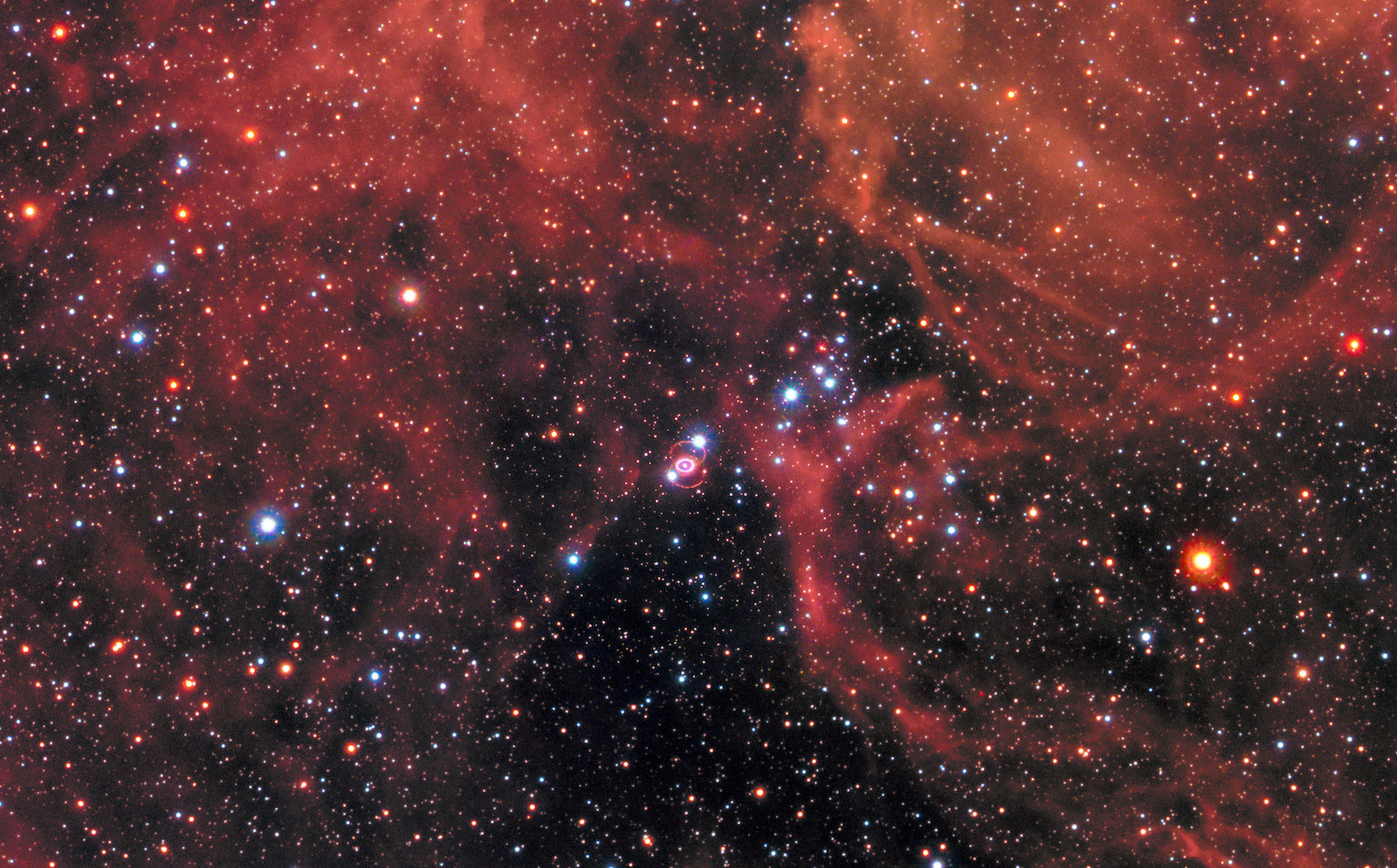
Supernovae are the explosions of stars. Stars can explode through two different channels, producing a zoo of diverse outcomes. High-mass stars explode when their massive core can no longer produce nuclear energy from fusion and collapses through its own gravity to produce a neutron star or a black hole. Low-mass stars, like our Sun, become white dwarfs after they exhaust their nuclear fuel, and can also explode as a thermonuclear supernova with a little help from another star.
I have worked on supernovae since my PhD, with a particular focus on understanding their diversity, geometry, physics, and environments. I have worked with all kinds of supernovae but I have a keen interest on exotic and rare events. Below, I highlight some of my key results, with a particular focus on superluminous supernovae (SLSNe), followed by a brief overview of broader expertise and contributions in thermonuclear and core-collapse supernovae.
Selected results
SUSHIES
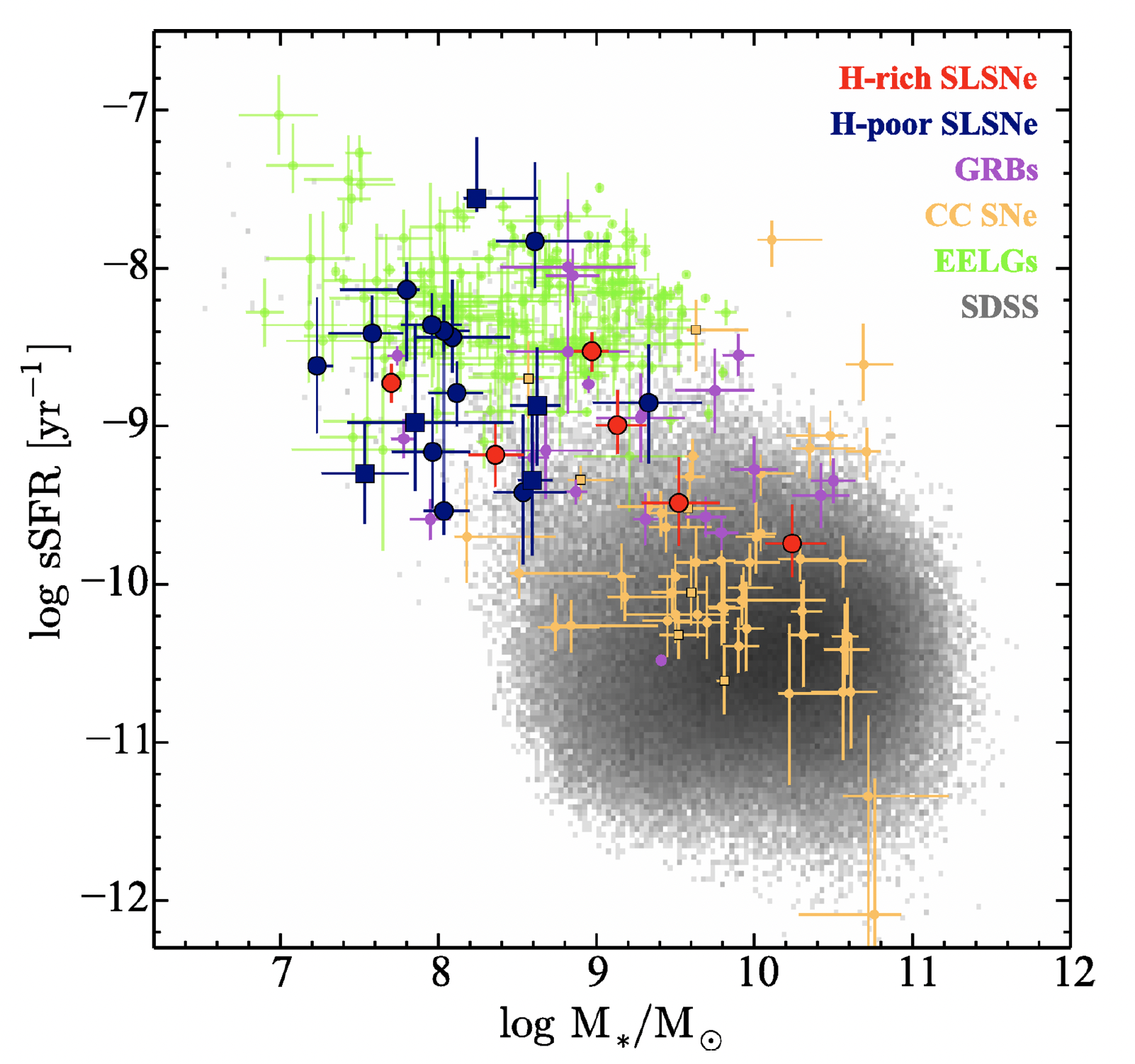
One of my favorite projects was when, together with Steve Schulze and other colleagues, I formed the SUSHIES collaboration to study the environments of SLSNe (SUSHIES: SUperluminous Supernova Host galaxIES). In our first paper, which I led, we showed that SLSNe-I not only preferentially occur in low-metallicity, starbursting dwarf galaxies, but are also often found in hosts with extreme emission-line properties. Our second paper focused on the photometric properties of SLSN hosts and consolidated the extreme nature of SLSN-I hosts, even in comparison to those of gamma-ray bursts (GRBs). Finally, SLSNe are frequently associated with galaxies displaying signs of interaction. Our interpretation is that SLSNe-I represent the very first stellar explosions following a starburst episode.
The geometry of superluminous supernovae
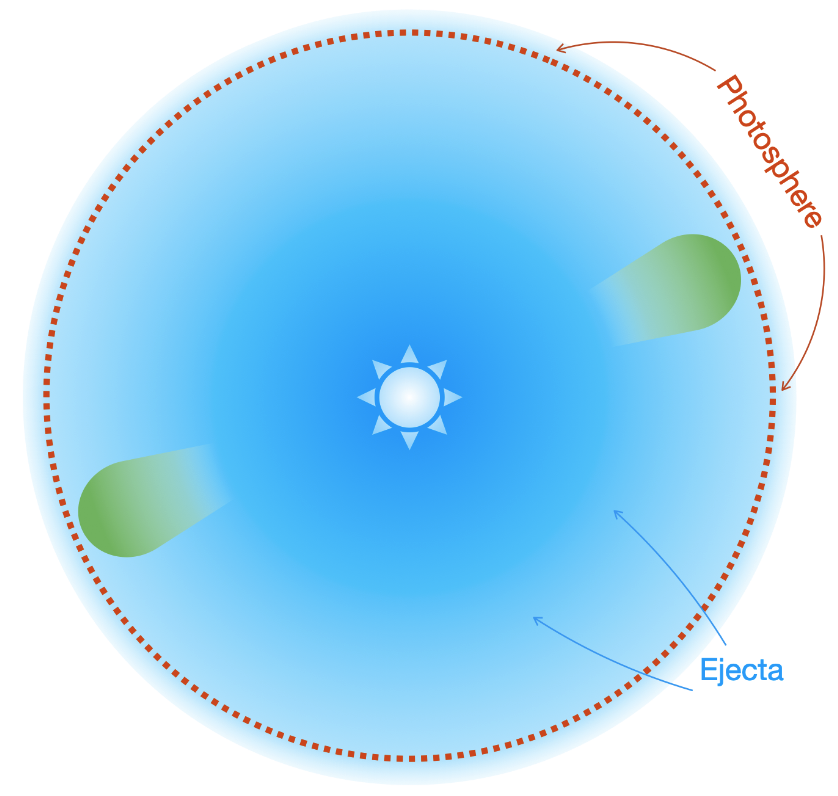
I pioneered the use of polarimetry to study superluminous supernovae. For supernovae, polarimetry provides a direct probe of the geometry of the photosphere and of deviations from spherical symmetry. The first SLSN we observed was consistent with a nearly spherical geometry. A second event proved more complex: its polarisation increased as deeper layers became visible, suggesting a structured, possibly two-layered ejecta configuration. This work culminated in a sample study led by my former postdoc Miika Pursiainen. We found that SLSNe-I are generally close to spherical at early phases, but that some events (slow SLSNe and/or showing signs of CSM interaction) develop increasing asphericity at later times.
The physics of superluminous supernovae
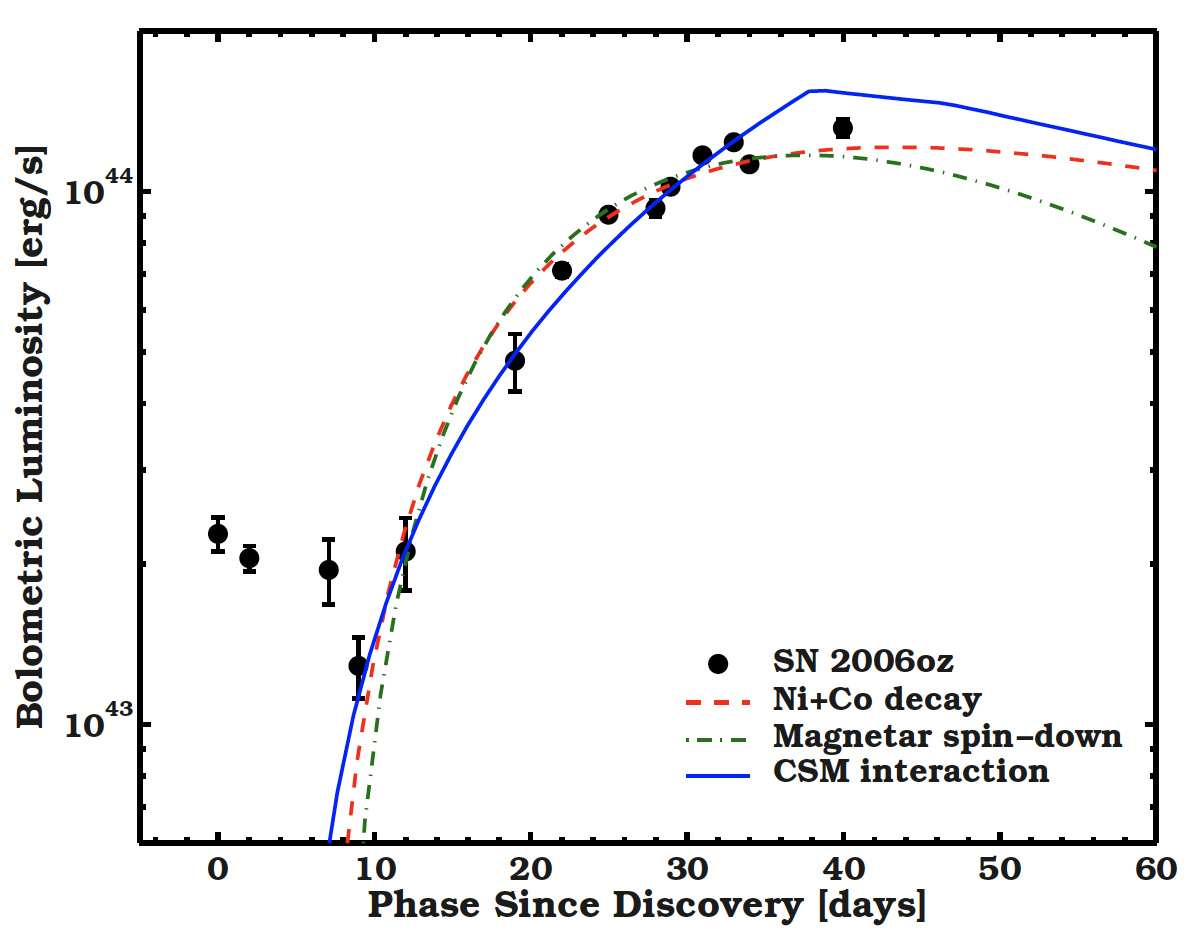
I have been involved in the study of SLSNe since the early days of the field. In a paper from 2012 I presented the first discovery of a precursor bump in the light curve of SN 2006oz. This feature, observed prior to the main peak, has since been identified in multiple SLSNe, and the most natural explanation is that it is related to some form of circumstellar material (CSM) eruption. Over the years, I have remained actively involved in many observational and interpretive studies of SLSNe through major surveys such as PESSTO and iPTF, contributing to our current understanding of their energetics, progenitors, and explosion physics.
Type Ia supernovae
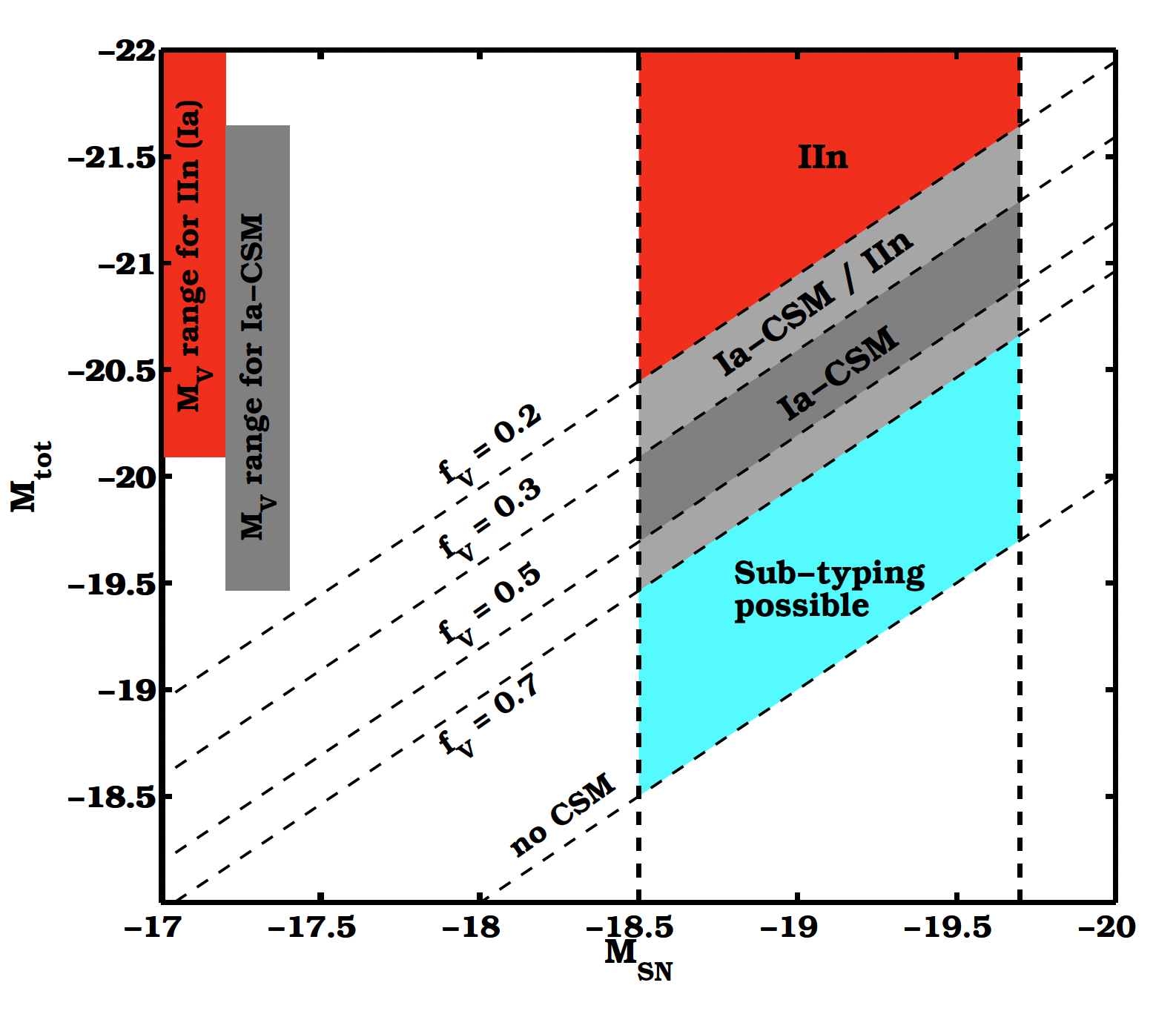
I have studied thermonuclear supernovae at different stages of my career and from multiple perspectives. During my PhD, I focused on SNe Ia at nebular phases. In a later study, I produced simulations of supernova spectra under strong circumstellar interaction and carried out a classification experiment involving ten expert SN classifiers, allowing us to determine when the true nature of the underlying explosion can be reliably identified. We showed that the observed association between SNe Ia-CSM and the 91T-like subtype is genuine (not due to a bias), and proposed that 91T-like explosions arise from single-degenerate progenitors, also providing the CSM. These days, I continue to work on SNe Ia within the BlackGEM collaboration together with my PhD student, Sigrid Nissen, with a particular focus on u-band observations.
Core-collapse supernovae
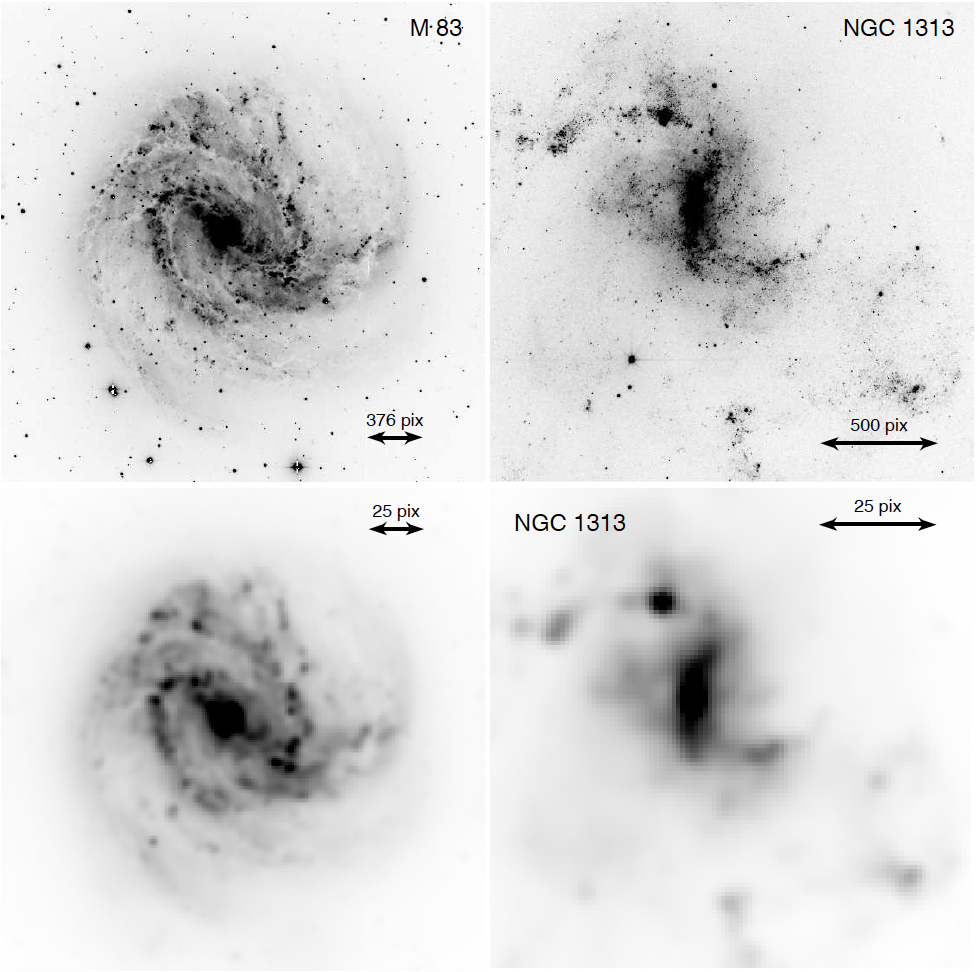
My early work on core-collapse explosions was largely focused on stripped-envelope supernovae. In one study, I demonstrated that the locations of Wolf–Rayet stars within their host galaxies closely match those of SNe Ib/c and long gamma-ray bursts (GRBs). Another study examined the local environments, metallicities and inferred stellar populations ages, at the explosion sites of SNe Ib/c. For a subset of events, the inferred progenitor ages appear older than expected for very massive single stars, pointing instead toward binary evolution channels. Throughout my career, I have worked on a wide range of core-collapse phenomena, including interacting supernovae, fast-evolving and peculiar transients, and the connection between supernovae and gamma-ray bursts. In recent years, my interests have increasingly shifted toward young and nearby explosions that allow detailed studies of the progenitors and pre-explosion mass loss.