Transient Surveys
Current surveys
The Legacy Survey of Space and Time (LSST)
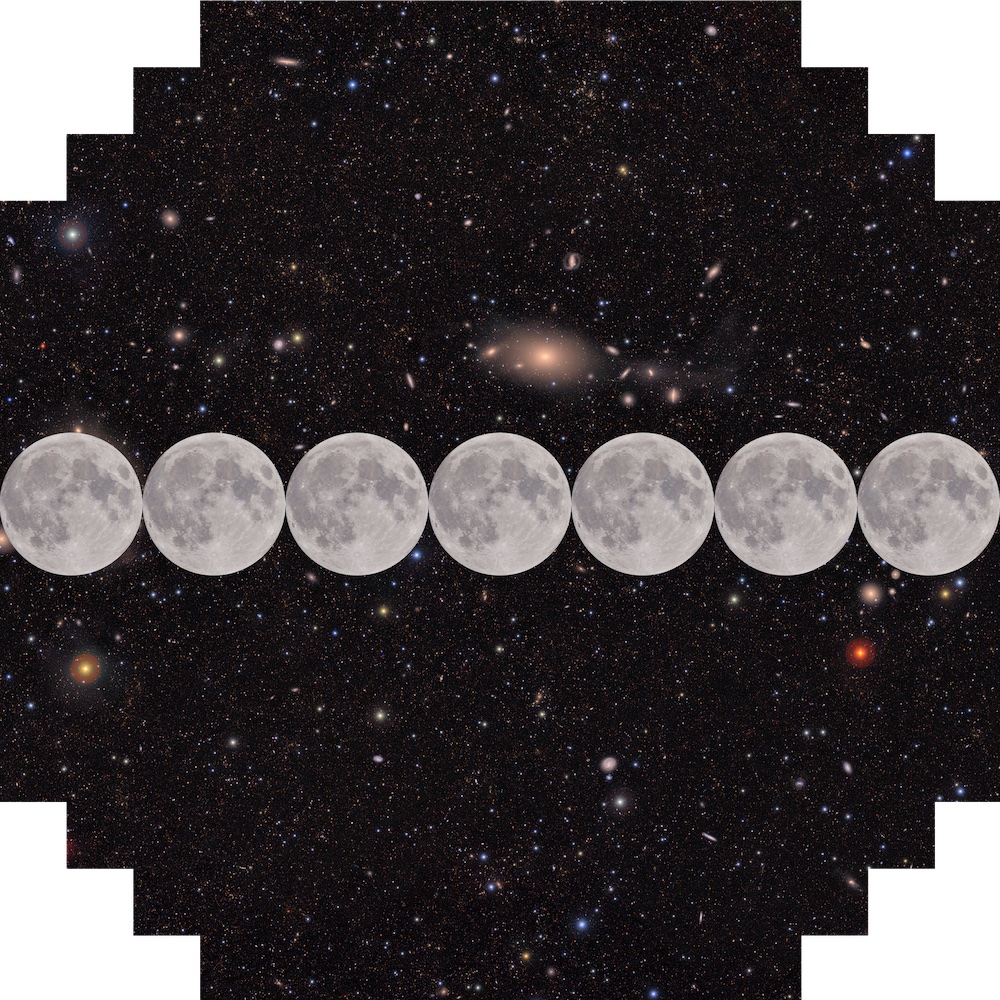
The Vera C. Rubin Observatory is an 8-m telescope equipped with the largest digital camera ever built (see image to the right, comparing to the diameter of the moon). It will conduct the Legacy Survey of Space and Time (LSST) over a ten-year period starting in early 2026. LSST will transform transient astrophysics by increasing, by orders of magnitude, the number of discovered transients, the volume of data produced, and the survey depth, while significantly extending the accessible redshift range for most transients. Meeting these challenges requires new analysis strategies that increasingly overlap with data science, including the use of machine-learning tools for transient classification and selection. I am a PI-level participant in LSST through the Danish national contribution and I am actively involved in the TDE group of the Transients and Variable Stars (TVS) science collaboration.
BlackGEM
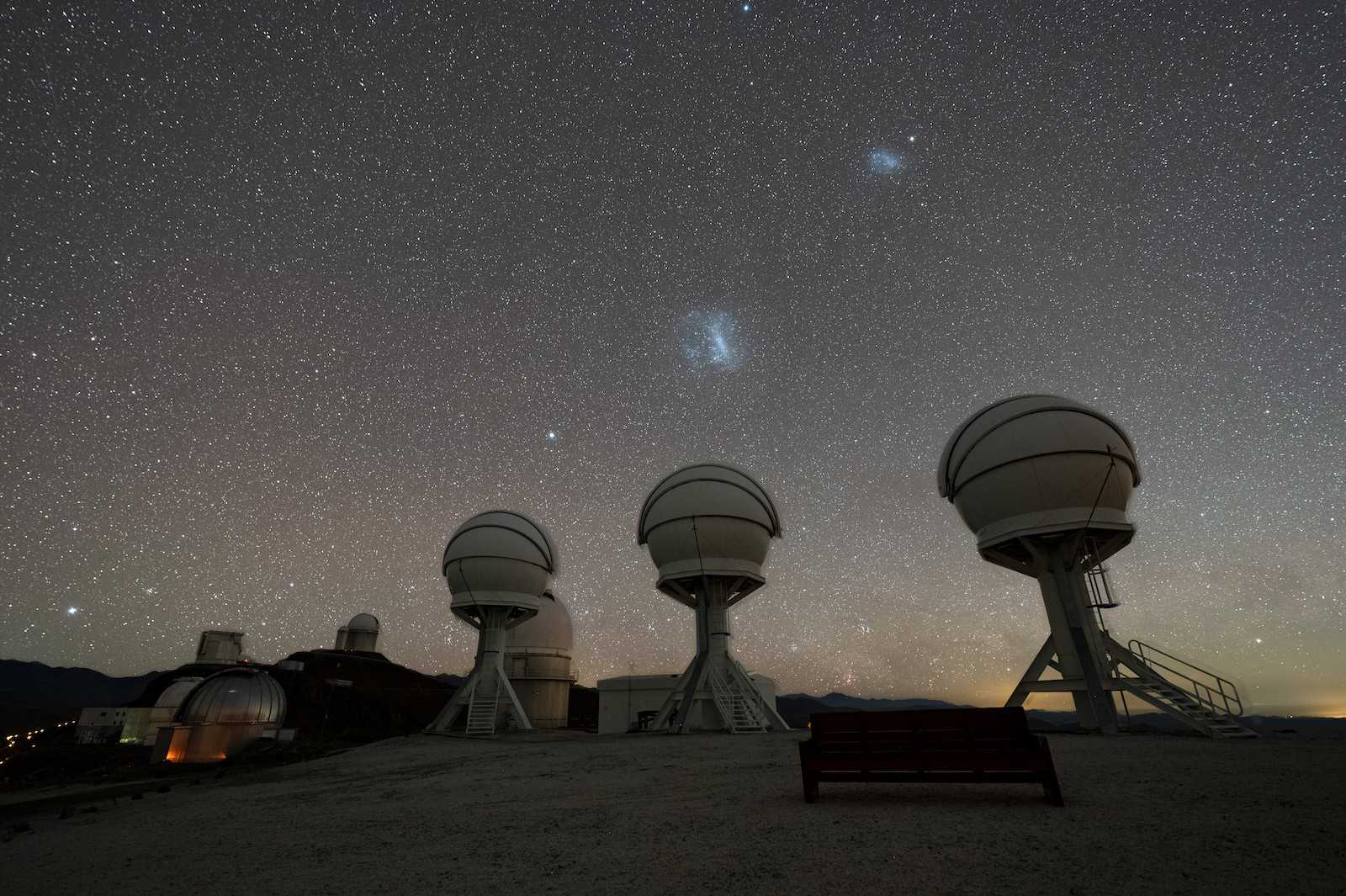
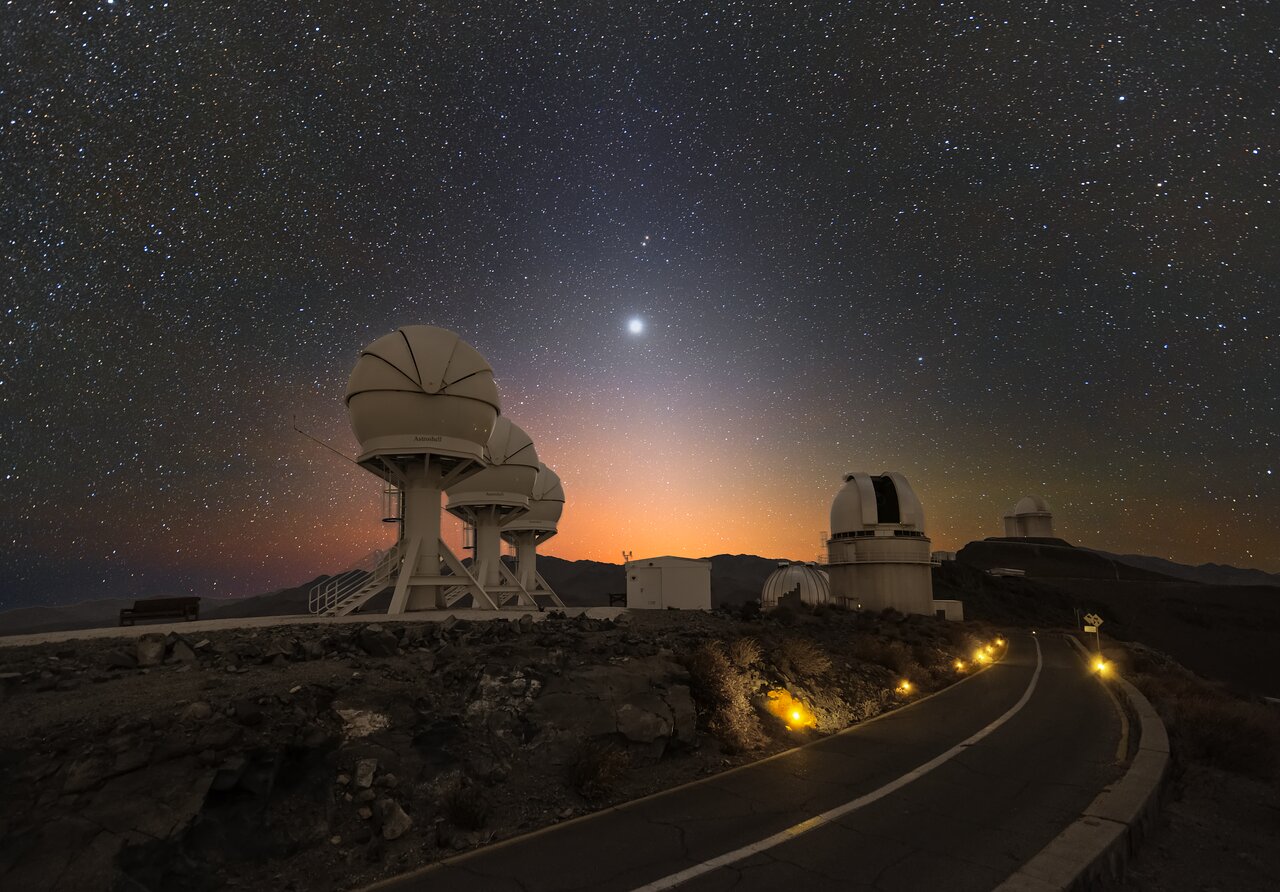
BlackGEM is an array of three telescopes located at the La Silla Observatory in Chile. One of its primary goals is to respond rapidly to gravitational-wave triggers and search for their electromagnetic counterparts. At the same time, BlackGEM conducts a range of transient surveys in the southern hemisphere. I am a PI-level partner of BlackGEM and my group at DTU Space is involved in several projects within the collaboration. These include the local transient survey, which aims to discover nearby supernovae (within ≲50 Mpc) within hours of explosion, and studies of Type Ia supernovae.
PESSTO and its successors
PESSTO and its successor surveys (ePESSTO, ePESSTO+) have operated since 2012 at the NTT telescope in La Silla. Unlike most transient surveys, PESSTO is primarily spectroscopic, addressing the critical need for spectroscopic classifications and spectroscopic transient follow-up. My involvement dates back to the start of the project, and in recent years I have served on the science board. I am also the coordinator of the TDE science group, which has produced a number of key publications over the past years.